
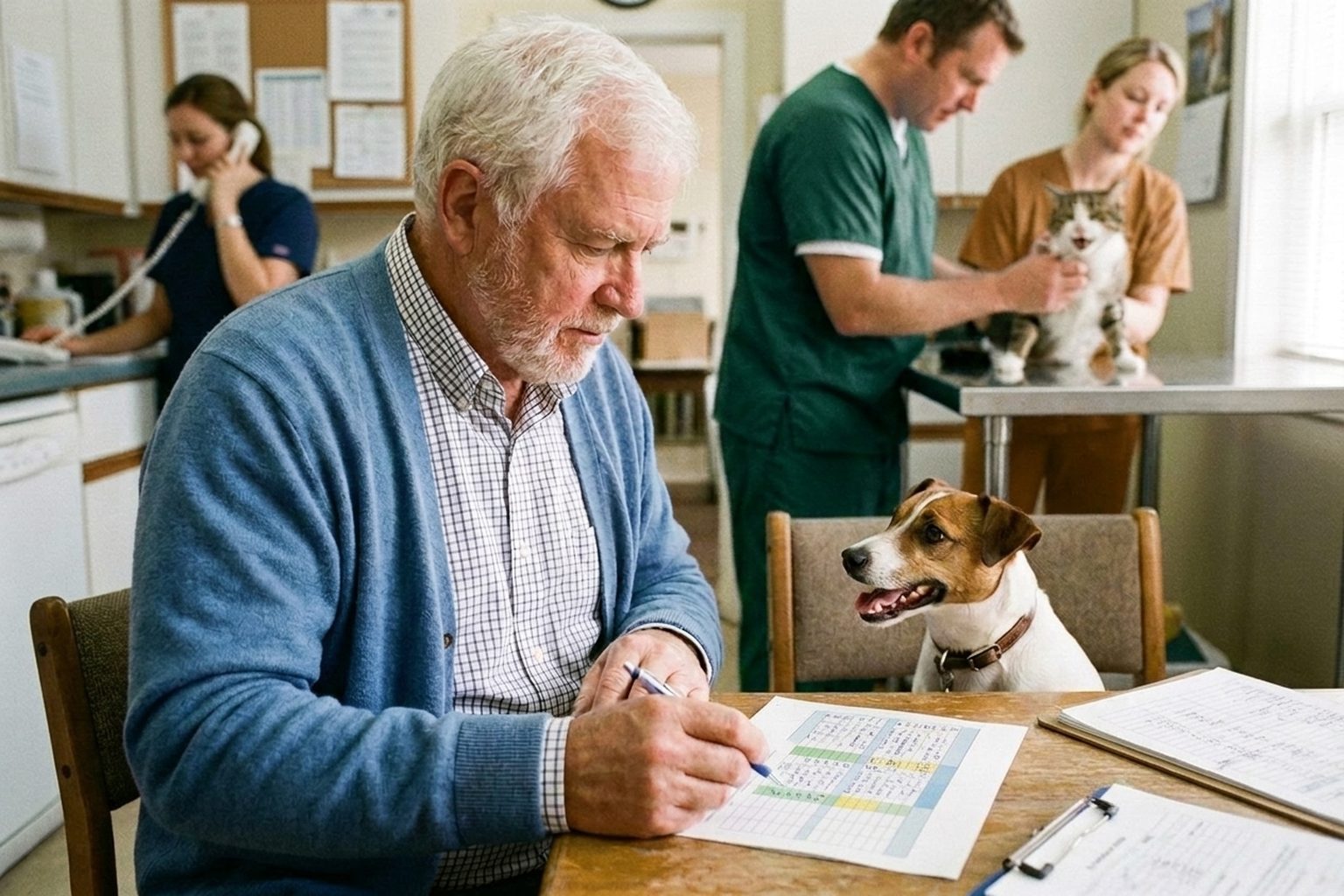
According to a recent data report from Frontiers in Veterinary Science and Brakke Consulting, nearly 50% of veterinary practice owners in the U.S. are over age 55. Yet a large percentage don’t map out a clear retirement strategy, even though their clinic is often the single most valuable asset they own.
Retirement planning for veterinary practice owners is where personal and business goals collide. Sellers often assume they’ll walk away in a year but without the right preparation, they risk leaving money on the table, facing buyer delays, or seeing deals fall through because their clinic still revolves around them.
Let’s understand how to take successful exits and help lift valuation, attract stronger buyers, and open options like phased exits, leaseback income, or equity rollovers.
Why Retirement Planning for Veterinary Practice Owners Needs to Start Early
Too often, owners assume they’ll just sell when the time feels right. But in today’s M&A environment, being ready means more than listing your clinic. It isn’t a quick exit. It’s a multi-phase process that ideally starts 2-5 years before your desired transition.
Why that long? Because it takes time to:
- Normalize your EBITDA and clean up financials across 2-3 years of accrual-based records
- Build leadership depth so the clinic runs without you at the center
- Create a lease structure (or sale plan) for your building, if you own it
- Explore your exit options: partial sale, associate buy-in, private equity, or strategic sale
- Shift client relationships and case responsibility away from your name
Without enough prep, most owners end up reacting and accepting suboptimal offers, staying involved longer than planned, or watching deals fall apart during diligence. Early planning protects your valuation, gives you leverage, and increases personal freedom.
How to Set Personal and Business Goals Before You Exit
Before you even think about selling your veterinary clinic, you need a clear picture of what you want your life to look like after the sale, and that’s where most veterinary owners stumble.
For many owners, retirement isn’t a hard stop. It’s a shift into a new role, a new lifestyle, or even a part-time advisory position. None of that happens smoothly unless your exit goals are clear on both sides: personal and operational.
Use this checklist to align both sides of the equation:
🔹 Personal Goal Alignment:
- Do I want to retire fully or continue part-time in a clinical or leadership role?
- Am I depending on the practice sale as my primary retirement income?
- Would I prefer a clean exit, or am I open to a phased transition?
- Do I want to maintain ownership of the building for passive income?
🔹 Business Readiness:
- Have I delegated daily decision-making beyond myself?
- Is my EBITDA good and backed by clean, accrual-basis financials?
- Does the clinic have associate DVMs capable of driving production?
- Is my lease structured in a way that supports a sale or leaseback?
Bridging these two domains helps avoid common traps like seller’s remorse, over-negotiating for control post-sale, or accepting a deal that doesn’t support your next chapter.
How EBITDA Influences Your Entire Exit Strategy
Before a buyer asks how many clients you see or how loyal your team is, they ask to see your numbers, specifically, your adjusted EBITDA. This single figure determines how much your practice is worth and how buyers will structure the offer. Yet most sellers overlook how early and carefully this needs to be addressed.
EBITDA (Earnings Before Interest, Taxes, Depreciation, and Amortization) shows your practice’s true earning power, but what’s more important is the normalized EBITDA, which is adjusted for owner perks, one-time expenses, and any salary paid below market.
For example:
- If your net income is $180,000
- And you add back $100,000 in excess salary
- Plus $25,000 in personal travel and one-time legal fees
Your adjusted EBITDA becomes $305,000, and not $180,000. That’s the number a buyer uses to value your clinic. At a 6x multiple, that’s $1.83 million. At 8x, it’s $2.44 million.
Note that numbers alone don’t guarantee high offers. To move up the multiple or valuation, you’ll also need:
- 2-3 Years of accrual-basis P&Ls (cash-basis books hurt credibility)
- Clear documentation of all add-backs
- Justified owner salary based on local market DVM pay
- Consistency, so no last-minute EBITDA spikes or unrepeatable surges
Here’s how EBITDA fits into your exit planning:
| Exit Element | How EBITDA Impacts It |
|---|---|
| Valuation | Multiples (anywhere from 4x to 15x) are applied to adjusted EBITDA |
| Buyer Type | Higher EBITDA opens doors to PE-backed groups and platforms |
| Deal Terms | Strong EBITDA = more cash upfront, fewer performance contingencies |
| Timeline | Prepped EBITDA shortens diligence by weeks or months |
✅Important for exit planning: Clinics with clean, verifiable EBITDA see faster diligence, fewer renegotiations, and stronger offers from corporate and private buyers.
Succession Planning in Veterinary Businesses Is a Multi-Year Process
Succession planning isn’t something you tack on at the end of retirement prep. It’s the foundation. Without it, your veterinary clinic’s value decreases fast, because no buyer wants to inherit a practice that only works when you’re in the building.
A proper succession plan takes time (often 2 to 4 years) and includes multiple phases:
1. 24 – 36 Months Out:
- Start identifying potential successors internally (associate DVMs or leadership staff)
- Define incentives or profit-sharing pathways to keep them engaged
- Start offloading owner-controlled tasks, such as financial approvals, client escalations, HR, etc.
2. 12 – 24 Months Out:
- Delegate client care, hiring, and performance management
- Finalize an org chart and shift client visibility to other doctors
- Prepare leadership contracts with retention bonuses if needed
- Strengthen leadership bandwidth to make sure someone besides you can make decisions
3. 6 – 12 Months Out:
- Finalize contracts for leadership staff (retention agreements, bonus plans)
- Hand off the final pieces of decision-making
- Remove your name from daily ops
- Ensure the practice runs for months without your input
- Practice full delegation to stress test the system
Without succession, most clinics with 1-2 DVMs fall into the lower valuation bracket (4x – 6x EBITDA), regardless of revenue. Buyers are pricing risk, and a clinic that doesn’t run without its owner is risky.
If you’re still the one solving every client issue, reviewing invoices, and making every scheduling decision, you don’t have a business; you have a job. Buyers can’t scale that. And that’s why succession planning in veterinary businesses is not about naming a successor but about transitioning your role long before the sale.
Here’s what the transition usually looks like:
| Role Element | Owner-Minded Clinic | Successor-Ready Clinic |
|---|---|---|
| Decision-making | Centralized with the owner | Shared across leadership |
| Client loyalty | Tied to the owner’s name | Tied to a brand or team |
| Production | 60-80% from the owner | Distributed across DVMs |
| Leadership | Informal or default | Clearly defined & documented |
This transition often feels uncomfortable, but it’s what gets you incredible offers and a peaceful exit. Clinics that don’t follow this step either stay unsold or are forced into long transition agreements to compensate.
How to Execute Retirement Planning for Veterinary Practice Owners
For most veterinary practice owners, retirement is a multi-year transition. The most successful exits take years to plan, reduce risk, and align their business with buyer expectations well before listing.
Here’s a five-stage plan for veterinary practice owners who want to build something someone else wants to own.
1. Define Your Exit Vision (Year 5)
Start with clarity. What kind of retirement do I want? Do you want a clean break or a phased transition? Would you prefer staying involved clinically or as a mentor? Will you sell the real estate or lease it back to generate income?
These decisions inform everything: deal structure, buyer pool, valuation methods, and even the timing of your exit. For example, if you plan to retain the real estate, lease terms will need to be finalized alongside the sale. If you want a fast exit, the business must already run independently. If you’re open to staying on, it widens your buyer options and helps secure stronger offers.
Checklist for this phase:
- Clarify your personal and professional goals post-sale
- Decide on real estate strategy (sell vs. lease)
- Outline your desired transition timeline (e.g., full exit vs. 2-year handover)
2. Make Your Financials Bulletproof (Years 5 – 4)
Buyers want predictability. And they’ll pay more when they can verify it. Accrual-basis books, normalized EBITDA, and justified add-backs are non-negotiable. They show how the business performs in reality, not just on paper.
Don’t try to pad your EBITDA with sudden cost cuts or revenue bursts in the final year. Instead, aim for 2 – 3 years of clean, consistent margins and growth.
It’s best to hire a professional practice sales advisor who understands vet clinic transitions. Calculate how much you need from the sale, what taxes will apply, and if a lump-sum payment or phased earn-out suits your goals. Many owners are surprised to learn how long they’ll need their income to last and how much of their net worth is tied up in the business.
Key actions here:
- Estimate post-retirement income needs and lifestyle costs
- Set a financial “walkaway number” based on practice valuation range
- Review potential tax implications from asset vs. stock sale structure
- Plan for passive income if retaining real estate
3. Reduce Owner Dependency Inside the Clinic (Years 4 – 3)
Most clinic owners are fully involved in daily operations. That’s fine, but all until you want to leave. To plan a successful exit, you need to remove yourself from being the center of the business.
That means creating systems, improving your team, and making decisions that don’t rely on your presence. Start by cutting back on owner production. Aim to reduce it below 40% of total revenue.
At this stage:
- Reduce your clinical production hours
- Delegate hiring, scheduling, and performance reviews
- Train a lead DVM or clinical director to handle case escalations
- Let your practice manager fully own scheduling, hiring, and HR
- Build a leadership rhythm with weekly meetings, financial reviews, and staff KPIs, all without you in the middle
4. Professionalize Financials and Lock in Value Drivers (Years 3 – 2)
Once your operations are more autonomous, build financial credibility. Buyers don’t just trust numbers, but they verify them. If your EBITDA looks inflated, inconsistent, or unexplainable, they’ll drop the offer during diligence.
This phase is about documentation, normalization, and sustainability, so move your books to accrual accounting (if not already done). Adjust your salary to match market compensation for a working DVM. Eliminate personal expenses and document add-backs. Avoid short-term margin boosts just to impress buyers, as these often backfire.
Tasks to complete:
- Use accrual accounting for 2 – 3 years of financials
- Normalize owner compensation to market DVM rates
- Document all add-backs (e.g., family payroll, legal settlements, non-clinic travel)
- Create a three-year trend of stable or improving EBITDA
- Address any operational bloat or inconsistent vendor costs
5. Get Buyer-Ready (Final 18 – 12 Months)
Now it’s time to package everything for external review. Buyers will want to see lease agreements, staff contracts, SOPs, compensation structures, org charts, and HR compliance. They’ll ask if your lease is assignable, if your staff plans to stay, and if your clinic runs profitably without you.
This final stretch is where last-minute issues often come up, like missing employment agreements, informal compensation, or unresolved legal risks. Fix these now and never during the diligence. Consider doing a full mock diligence review with a practice sales advisor or M&A specialist.
What to finalize:
- Employment contracts and bonus structures
- Org chart with clearly defined roles
- 7 – 10 year lease (or leaseback with fair terms if you own the property)
- SOPs for clinical workflows, emergencies, inventory, and client care
- Tax returns, profit & loss, and payroll reports ready to share
Fix the Gaps That Cost Owners Millions at Retirement
Transition your business and retire without harming the business. We help plan your exit around the right people, numbers, and timelines

Handling Real Estate for Post-Sale Income
If you own your clinic property, it’s likely one of the most valuable assets you hold. But in a veterinary acquisition, that asset can either enhance your retirement income or disrupt the entire deal, depending on how it’s handled.
Most buyers don’t want to purchase the property outright. They want to lease it, so your role, post-sale, often shifts from clinic owner to commercial landlord.
And that change comes with real decisions.
🔹Lease Terms Are Risk Calculations
Buyers evaluate your lease terms as part of their diligence. If the lease is expiring soon, is month-to-month, or priced above fair market value, they may view it as a liability. That can lead to a lower offer or a delayed close.
What buyers expect:
- 7-10 year lease term (stability over time)
- NNN lease (tenant pays taxes, insurance, maintenance)
- Market-rate rent (typically 6–8% of gross revenue)
- Right of renewal and assignability clause
- Facility in good condition or with planned upgrades
Poor lease terms or ambiguity are common reasons deals fall apart late in diligence.
🔹Your Real Estate = Future Income, If Structured Right
If you lease the building to the buyer under clean, long-term terms, it becomes a source of passive income for you in retirement.
Let’s say you charge $120,000 per year in rent. That’s $10,000/month in recurring income, secured by a signed lease with a corporate-backed entity. For many sellers, that becomes their “retirement paycheck.”
But for this to work:
- Rent must be justifiable based on market comps
- The lease must be negotiated before the deal progresses too far
- Your building must meet buyer standards (zoning, maintenance, etc.)
🔹 What If You Sell the Real Estate Too?
A few sellers opt to sell the clinic and the building together, which is clean, but less flexible. It gives you a larger lump-sum payout, but you give up future income.
So, your 3 main options are:
- Keep the property and lease it to the buyer (most common)
- Sell the practice and the property as a bundle (simple but final)
- Sell the practice and list the building separately (can work if you want max price for each)
The right decision depends on your financial goals, but the wrong lease terms or no terms can create confusion, delay negotiations, and invite price reductions.
Common Mistakes That Undermine a Successful Retirement
Most veterinary practice owners underestimate what it takes to retire well. They concentrate on selling at the “right time,” meeting a revenue goal, or handing off the clinic to a buyer who seems like a good fit.
However, a nice, profitable exit depends on much more than timing or gut feel. It requires a business that’s buyer-ready.
Here’s what consistently goes wrong:
1. Too Much Owner Dependency, Too Late to Fix It
Even financially successful practices lose value when buyers see the seller doing everything. If you’re still handling surgery, HR, vendor calls, and case oversight, you’ve become the bottleneck. It doesn’t just lower your multiple but also creates uncertainty post-sale.
Why it matters:
- Buyers see risk in replacing you
- Transition will require longer handholding
- Associates may leave if leadership isn’t strong without you
✅Fix: Step back gradually, 12 – 24 months before listing your practice for sale. Delegate leadership tasks, reduce your clinical hours, and empower others to make decisions.
2. Unverified or Inflated EBITDA
Your EBITDA is a narrative. Buyers want to see three years of consistent profitability, not one great year with unexplained spikes. If your add-backs are vague or your financials don’t match your story, expect retrades or worse, no offers.
Common red flags:
- Add-backs with no justification (e.g., “consulting” fees to relatives)
- One-time revenue bursts that aren’t sustainable
- Owner’s salary far below fair market value (e.g., $70K for full-time DVM)
- Personal expenses running through the P&L
✅Fix: Normalize earnings 2+ years before sale. Adjust your comp, clean up the books, and document every add-back with invoices or explanations.
3. Lease and Real Estate Blind Spots
Many sellers forget that the real estate can make or break the deal. If your lease is expiring, above market rate, or non-transferable, buyers see risk. And if you own the property but haven’t thought through leaseback terms, the deal stalls.
Examples of issues:
- No written lease or month-to-month agreement
- High rent relative to EBITDA (over 7-8% is a concern)
- Zoning or ownership complications
- Buyers forced to negotiate lease terms mid-diligence
✅Fix: Lock in a 7–10 year lease at market terms before listing. If you’re leasing it back, have it reviewed by a real estate attorney familiar with vet M&A.
4. No Succession or Team Plan
If your associate is thinking about quitting, your tech team turns over every 6 months, and you don’t have a manager in place, buyers will hesitate. A strong team is part of what they’re buying.
What buyers want to see:
- At least one long-term associate DVM
- A stable practice manager or team leader
- Signed contracts or incentive plans to ensure retention
- Evidence that the clinic runs with minimal disruption
✅Fix: Build this bench 1-2 years ahead. Don’t wait until you’re ready to list. By then, it’s too late to create continuity from scratch.
5. No Alignment Between Personal Goals and Deal Structure
One of the biggest mistakes is assuming you’ll sell for a number that matches your lifestyle needs, without checking if the practice can support that valuation. Or thinking you’ll walk away cleanly, only to realize buyers need you to stay for 2-3 years.
Typical mismatches:
- Expecting all-cash offers for high-risk practices
- Wanting to retire immediately, but you’re still generating 80% of the revenue
- Hoping to sell for $4M when your normalized EBITDA is $400K
- Refusing to consider earn-outs when the business lacks handover prep
✅Fix: Get a readiness assessment early. Know what you’re walking into. Align your financial expectations and lifestyle goals with market conditions.
Conclusion
Most owners want two things from retirement: peace of mind and fair value for their life’s work. But those outcomes don’t happen by accident. Retirement planning for veterinary practice owners is a strategic process and it rewards preparation more than timing.
The sooner you align your business with what buyers want, the more options you create for yourself. Trying to figure that out alone while still running the clinic is where most owners get stuck.
A good practice sales advisor helps you find the right buyer, clean up your financials, clarify your exit path, and make sure your business is ready long before you sign anything. If you’re serious about getting the most from what you’ve built, start now with the right partner and a clear plan.
FAQs
Ideally, 2-5 years before your target exit, as it allows time to improve your financials, reduce owner dependency, and increase buyer confidence.
Target an adjusted EBITDA of $300K+ with margins over 20%, clean accrual-based books, and documented add-backs. Revenue per DVM should be around $500K-$600K.
Yes, but you’ll need to show buyers that the clinic can operate without you. So, hiring and delegating ahead of time, or accepting a lower multiple if you’re central to operations.
Not always. Many owners lease the property back to the buyer and retain it as a source of passive income. Just make sure lease terms are clean, long-term, and market-aligned.
Waiting too long to prepare. Last-minute fixes, unclear financials, or no succession plan often lead to price cuts or deal delays. Starting early gives you leverage and even, options.